|
|
|
|
|
In this edition, we’re talking maturity—digital maturity. Not the cake-and-candles kind, but the how-restaurants-master-their-tech kind.
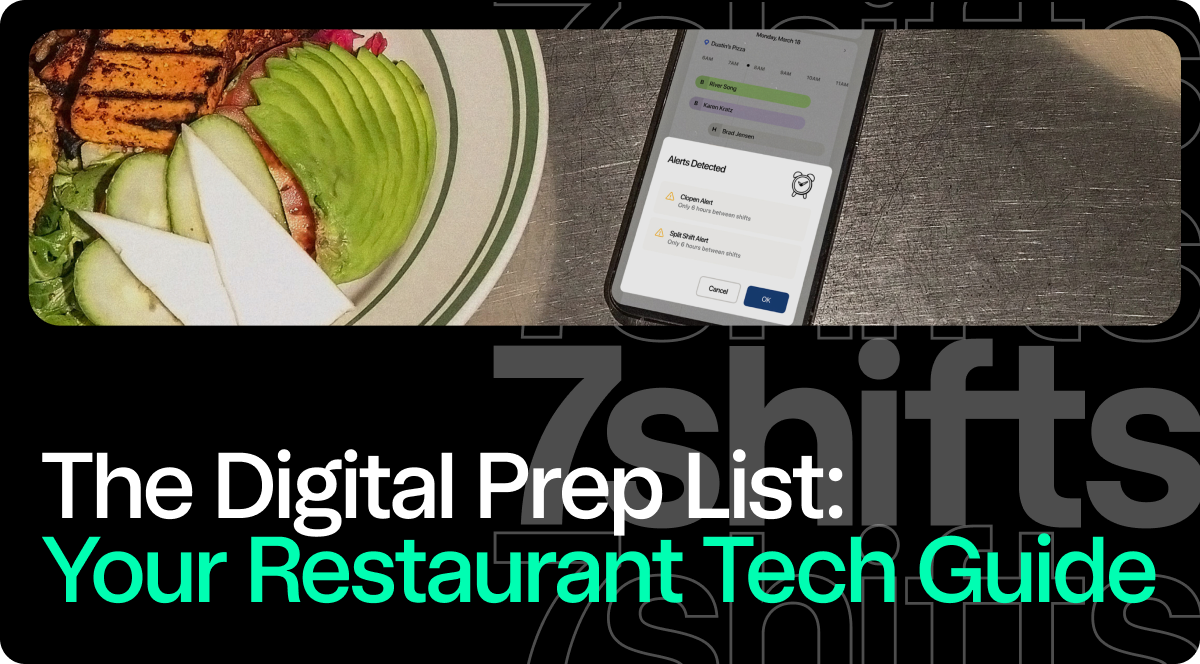
7shifts just released a new data report, The Digital Prep List: Your Restaurant Tech Guide, which explores the different stages of restaurant tech and where the industry stands today.
From those stuck in the pen-and-paper phase to those running fully integrated systems, the journey to smarter, faster, and more profitable operations is entirely mapped out, so you can see how your restaurant stacks up.
|
|
|
|
 |
The 4 stages of digital maturity |
 |
You vs your tech stack |
 |
Why leveling up matters |
|
|
|
|
Age is just a number. But (digital) maturity? That’s the real glow-up.
|
|
 |
BY THE NUMBERS
|
|
 |
20%
Of restaurants are in Stage 1: Starting |
|
 |
30%
Of restaurants are in Stage 2: Growing |
|
 |
33%
Of restaurants are in Stage 3: Integrated |
|
 |
14%
Of restaurants are in Stage 4: Strategic |
|
|
 |
REALLY BIG INSIGHT
|
|
|
|
“This is how we’ve always done it.”
Whiteboards, ticket books, sticky notes—and a whole lot of intuition. These operators know their business, their people, and their regulars inside out. It’s hospitality at its purest, where relationships run the show and decisions happen in real time.
But as the business grows—and yes, 34.5% of these folks have been at it for over a decade—relying only on gut instinct can start to slow things down.
What does this stage look like?
👉 47% of operators still use paper or whiteboard schedules
👉 25% of operators rely mostly on experience and daily observations to make decisions
👉 55% communicate updates face-to-face during shifts
👉 50% manage inventory with manual counts and paper lists
👉 32% track time using paper sheets or written logs
|
|
|
|
“I use software, but the apps don’t talk to each other.”
This is the first step—or rather, a toe dip—into the digital world. These restaurants are swapping sticky notes for general tech tools that aren’t restaurant-specific. Think: a payroll system that doesn’t ‘get’ tips.
Operators in this stage are natural problem-solvers, tackling big pain points first. But while progress is progress, it doesn’t come without headaches. These tools don’t talk to each other (aka: integrate), which means silos, double work, and plenty of manual fixes.
What does this stage look like?
👉 57% of operators still rely on group texts for team communication
👉 23% use Excel or Google Sheets > paper for scheduling
👉 56% track employee time through their POS—as a standalone punch clock
👉 32% manage inventory with spreadsheets > manual counts
|
|
|
|
“I’m starting to connect the dots.”
Okay, now it’s getting real (connected). Operators ditch the generic tools for restaurant-specific platforms: powerful enough for chaos, simple enough for the team. And the payoff? Hours saved and real cost cuts.
They’re also starting to integrate systems—POS with scheduling, scheduling with payroll—and learning fast. Sure, there are some growing pains, but the efficiency gains are worth it (and managers get the tools to really run the show).
What does this stage look like?
👉 27% of operators have some basic integrations between key systems
👉 32% adopt basic scheduling software—made for restaurants
👉 32% use dedicated team communication apps
👉 21% face integration challenges with existing systems
|
|
|
|
“One system, one source of truth.”
The final stage. Operators here have *most* things figured out. Their ecosystem is stable and connected, handling the basics reliably. And sure, there may still be quirks, but the ops are covered—freeing up time to try out tech like AI phone systems, advanced analytics, and new guest tools.
And no, this isn’t robots-in-the-kitchen territory. Here’s the key: intuition and personal touch aren’t gone. Better data just supercharges gut instincts, letting operators make faster, smarter decisions while keeping that human touch alive.
What does this stage look like?
👉 33% of restaurants have “most systems connected with minimal manual work”
👉 16% of restaurants have “highly integrated systems with real-time data flow”
👉 28% use fully automated data transfer to payroll
👉 36% use automated tip pooling systems
👉 36% monitor labor costs in real-time
|
|
|
STORIES FROM THE FLOOR
|
|
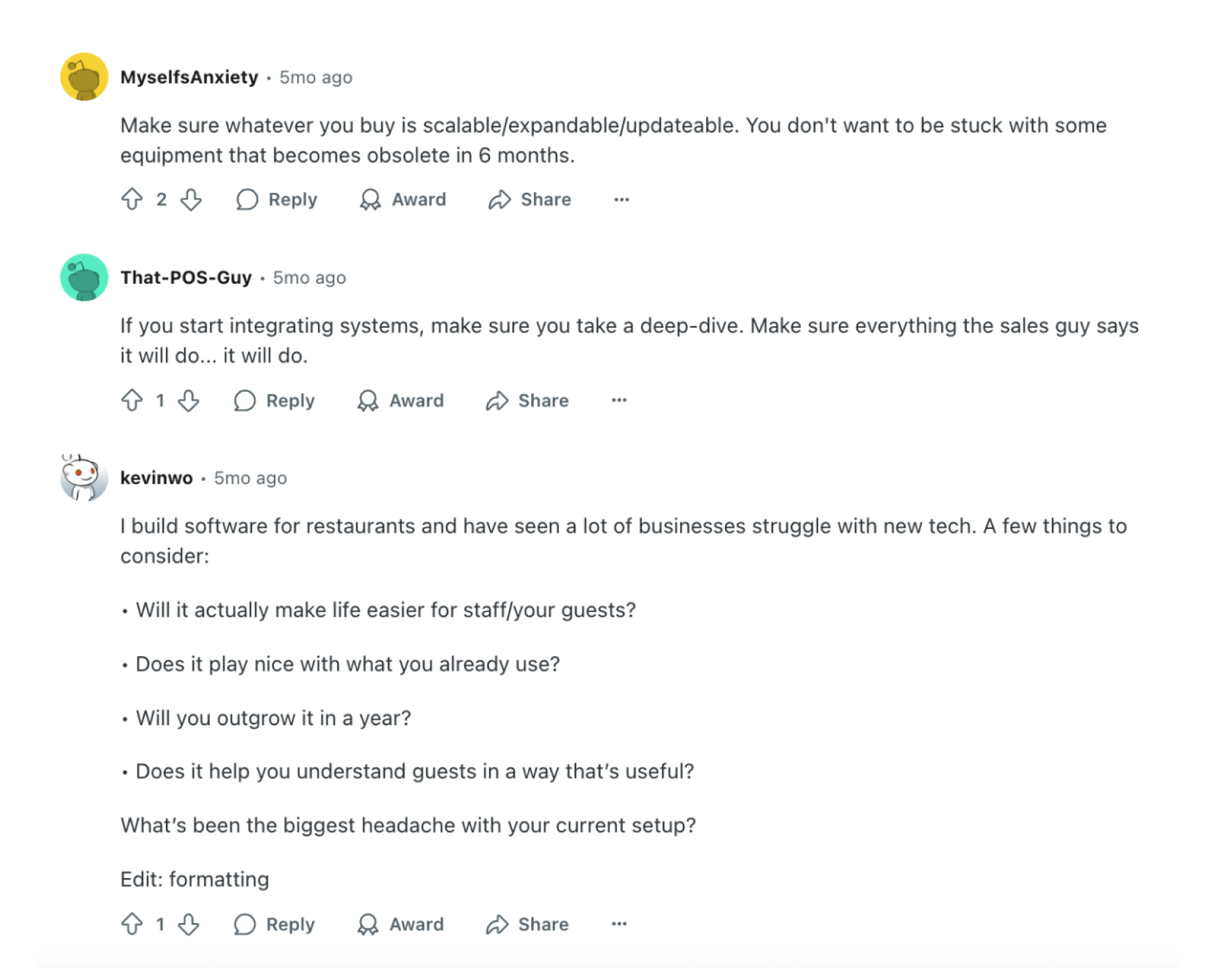
Quick reality check: adopting restaurant tech doesn’t mean signing up for every shiny platform out there. You’ve got to pick wisely. Here’s what some Reddit folks had to say about evaluating new restaurant tech:
|
|
|
|
|
QUIET ON SET
|
|
If you’re an audiovisual learner, Sam Fung turned this data into a story—following ‘Alex,’ a fictional restaurant owner, as she moves from pen-and-paper to fully automated workflows. Along the way, you’ll also see real-world examples sprinkled in.
|
|
|
|
 |
FOOD FOR THOUGHT
|
|
But why should you care about the four stages? Or about moving up the ladder?
💰Cost control: 44% of restaurants aren’t hitting their labor targets. Sure, inflation doesn’t help, but if you can turn real-time data into real-life savings, why not give it a shot? Integrated systems let you build schedules with accurate sales forecasts—no more guessing about the Saturday night rush.
👥Employee experience: It costs $2,611 to replace a manager. Turnover is expensive, and putting the right dollars in tech to keep employees engaged can help your bottom line in the long run. Think: mobile schedules, transparent communication, and accessible pay stubs.
📈Smarter growth: 31% of operators are still manually typing payroll hours—a job that integrated systems can handle in seconds. When owners and managers are buried in back-office work, there’s no room for big-picture thinking. The biggest roadblock to growth = no time. And the right tech = more time back.
|
|
|
 |
SPOTLIGHT
|
|
|
|
Not sure where you land on the tech maturity scale? Take the quiz to find out which stage you’re part of—or download the full report for free, packed with industry insights and actionable tips.
|
 |
À LA CARTE
|
|
|
|
|
 |
QUOTABLE
|
|
To wrap things up, here’s a little tech wisdom from visionary restaurateur Danny Meyer on The Pre-Shift podcast:
“ Every business is a hospitality business, and every hospitality business should be a technology business. Not that the end product of what we do is technology, but anytime technology can help us spend more time having better relationships with people—whether they’re the people who work for us or the people who are spending money at our restaurants—that’s a good thing.”
|


.png)